


Does ICSI Increase the Chances of Success?
Does ICSI Increase the Chances of Success?
Intracytoplasmic sperm injection (ICSI) is a modern assisted reproductive technology that has been actively used for over 15 years. This method, which is an integral part of in vitro fertilization (IVF), significantly increases the chances of successful conception and pregnancy, especially in cases of severe male infertility.
The ICSI Procedure
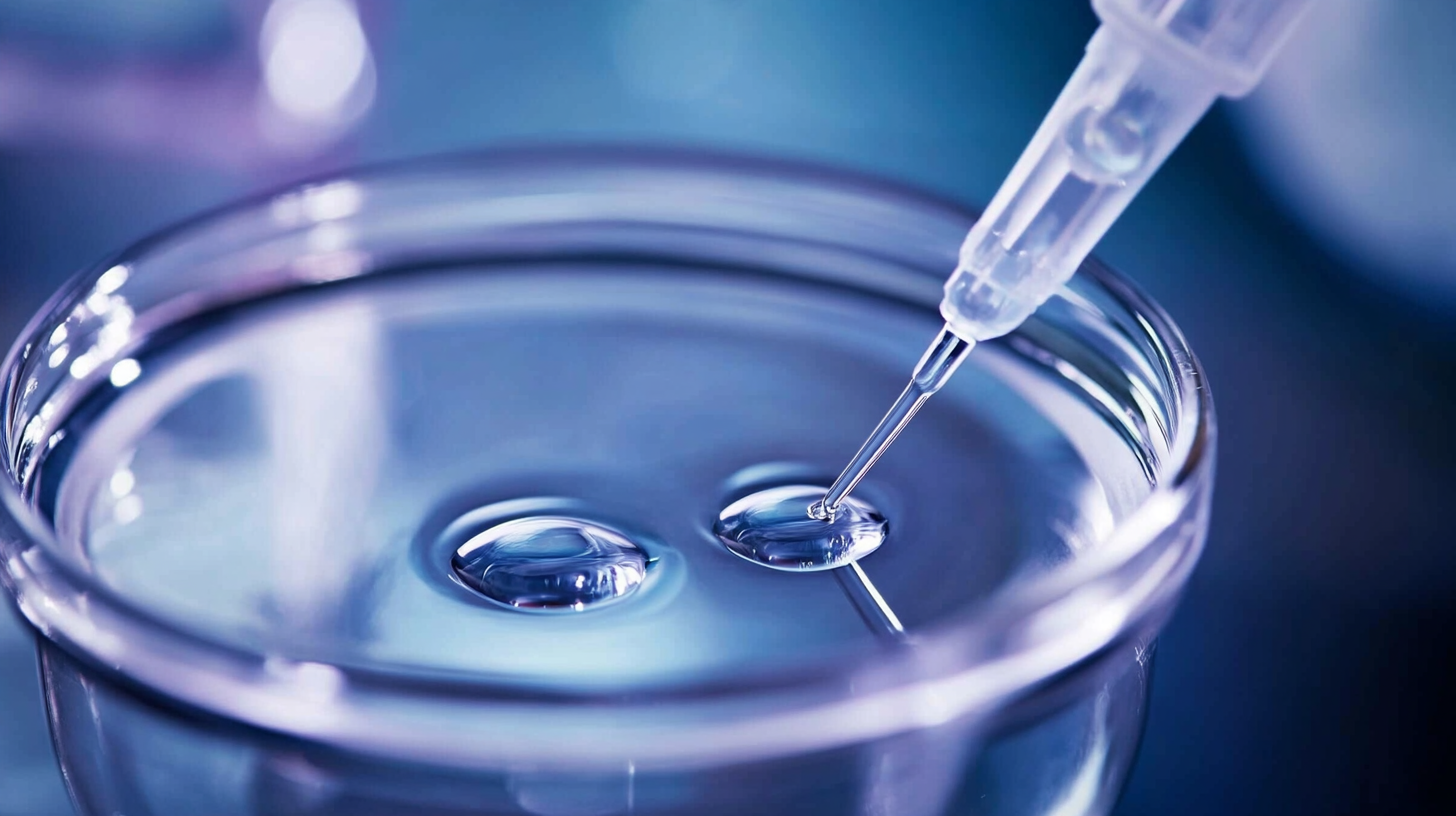
ICSI involves injecting a specially selected sperm directly into the cytoplasm of an egg. The procedure is performed under a powerful microscope using glass microtools—micropipette and micro-suction capillary (holding pipette). These tools are connected to micromanipulators, which translate large hand movements via joysticks into microscopic movements of the instruments.
The steps of the procedure include:
Collection of Sperm and Eggs: Sperm can be collected naturally or via testicular biopsy if the sperm count is insufficient or if sperm are completely absent. Eggs are retrieved after ovarian stimulation in the woman.
Selection of the Sperm: The embryologist selects the fastest and most morphologically normal sperm. The sperm is immobilized by a micropipette (tail is cut) and then drawn into the micropipette.
Sperm Injection: The embryologist, holding the egg with the micro-suction pipette, punctures the egg’s membrane with the micropipette and injects the sperm inside.
Embryo Transfer: After successful fertilization, the egg begins to divide, forming an embryo, which is then transferred to the woman's uterus after a few days.
Embryos obtained through ICSI develop normally, and children born after IVF with ICSI do not differ in their physical and intellectual abilities from children conceived naturally.
Indications for ICSI
Although ICSI was originally developed to treat male infertility, it is now recommended in several cases where standard IVF may be ineffective. The main indications include:
Abnormalities in Semen Analysis: Reduced concentration, motility, or normal morphology of sperm.
Absence of Sperm: In such cases, sperm can only be obtained through testicular biopsy.
Retrograde Ejaculation: A condition where sperm enters the bladder instead of the seminal fluid.
Combination of Various Abnormalities: The presence of several factors affecting sperm quality.
Use of Cryopreserved Sperm: After thawing, the motility of sperm often decreases.
Fertilization of Previously Frozen Eggs.
Reduced Ovarian Reserve in Women: When the quantity and quality of eggs are decreased.
Advanced Age of Patients: As age increases, the quality of eggs and sperm deteriorates.
Unsuccessful Previous IVF Attempts.
Unexplained Infertility.
ICSI Effectiveness
The effectiveness of ICSI is confirmed by numerous studies. Normal embryo development with this method is observed in 80-95% of cases, significantly increasing the likelihood of pregnancy. The probability of successful conception ranges from 50% to 70%, depending on the age of the couple, the quality of sperm and eggs, and the presence of accompanying pathologies.
The success of ICSI depends not only on the method itself but also on the timely consultation with specialists. Proper diagnosis and correct application of the ICSI procedure can significantly improve the chances of success. The minimal risk of embryo damage after ICSI, estimated at only 2%, makes this method safe and preferable in situations where other methods may not yield the desired results.
ICSI as Part of IVF
ICSI complements the standard IVF program, significantly enhancing overall success rates. In some clinics, the artificial insemination program using ICSI is referred to as "IVF + ICSI," emphasizing an integrated approach to solving infertility problems. Practice shows that ICSI is used in 70% of IVF cases, which is associated with the high effectiveness of this method.
ICSI is an important method in reproductive medicine, especially for overcoming male infertility and other obstacles to pregnancy. It significantly increases the chances of successful fertilization and embryo development, making it an integral part of the IVF program.