


Cryopreservation: Modern Possibilities for Preserving Reproductive Health
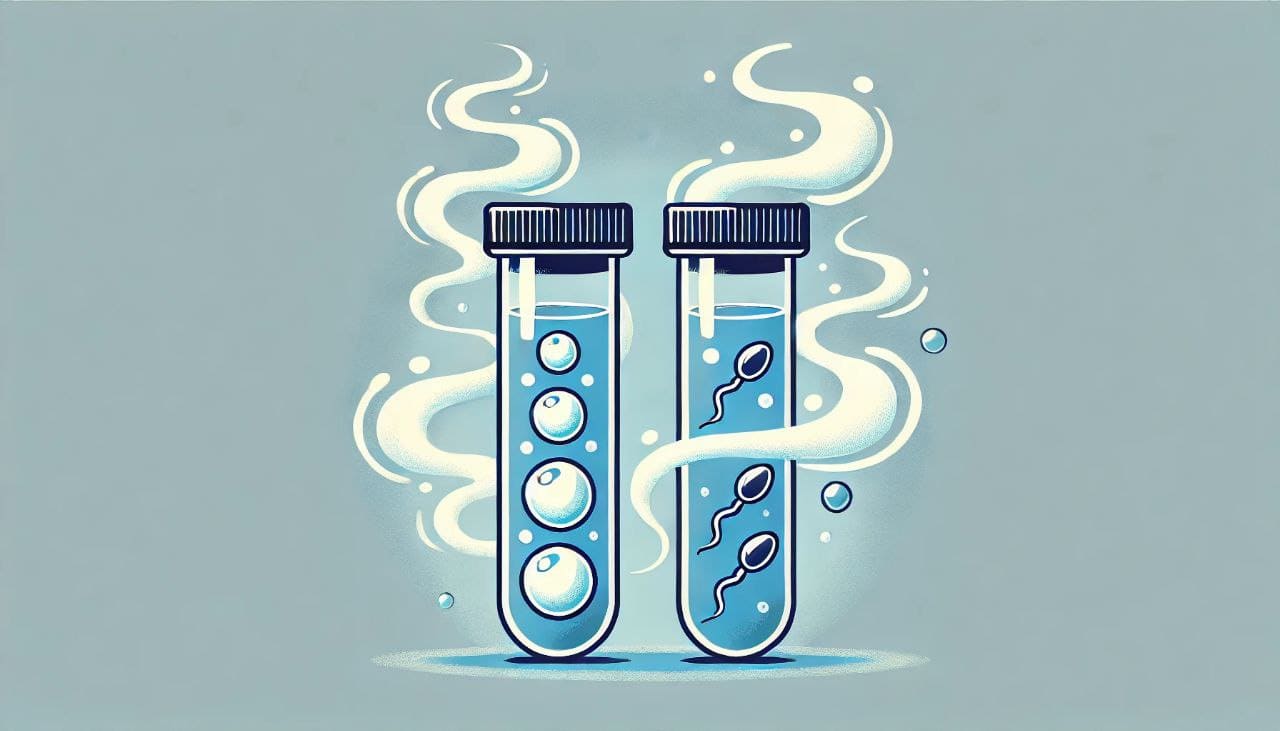
Cryopreservation is a reliable method for storing biological material at extremely low temperatures, allowing it to retain its biological functions for extended periods. The process involves freezing reproductive cells (sperm, eggs) or embryos and storing them in special containers, known as Dewar vessels, under a layer of liquid nitrogen at -196°C, which completely halts all biological processes.
Modern medicine actively utilizes cryopreservation to preserve the cells and tissues of the human reproductive system. This method allows for the long-term storage of not only eggs and sperm but also embryos, making it indispensable in in vitro fertilization (IVF) programs. The biological material is pre-treated with a cryoprotectant—a protective solution that prevents tissue damage during freezing and subsequent thawing.
Vitrification — A Modern Cryopreservation Method
The traditional method of cryopreservation involves slow cooling to the required temperature, which can pose a risk to embryos and eggs due to the potential formation of ice crystals. However, the modern method of vitrification prevents this issue by freezing the material at an ultra-rapid rate—up to 9000 degrees per minute—making the process safer and more effective.
Embryo Cryopreservation
Embryos obtained during IVF can be frozen for future attempts. This method is especially useful when the first IVF attempt does not result in a successful pregnancy or if the couple plans to have a second child in the future. Frozen embryos can be used for repeat IVF cycles, avoiding the need for repeated hormonal stimulation and egg retrieval.
Additionally, embryo cryopreservation plays a crucial role in surrogacy programs, enabling the transfer of frozen embryos to a surrogate mother at a time convenient for her.
Egg Cryopreservation
Egg cryopreservation gives women the opportunity to preserve their eggs for future use. This is particularly relevant for women who plan to delay motherhood or those who need to undergo treatments that may adversely affect reproductive function, such as chemotherapy or radiation therapy.
Egg cryopreservation offers women the chance to become mothers in later reproductive years—after age 35–40, and even after menopause. This method helps reduce the risk of genetic abnormalities in the fetus, which increases with age. Young eggs, frozen before age 35, can be used to achieve a successful pregnancy in the future.
Key Statistics:
At age 25, the chance of conceiving within one year of regular intercourse is about 85%.
Between the ages of 25 and 35, this figure drops to about 45%.
After age 35, the likelihood decreases to 25%, and after age 40, it drops to about 10%.
Frozen eggs do not age and retain their quality, making this a reliable method for preparing for future motherhood.
Sperm Cryopreservation
Sperm cryopreservation can be beneficial for men facing the risk of fertility loss due to treatment or professional factors (e.g., hazardous work environments, military service). Cryopreservation allows for the long-term preservation of viable sperm for future use in IVF programs or artificial insemination.
Key Indications for Sperm Cryopreservation:
Insufficient sperm count or low sperm motility. Cryopreservation allows sperm to be accumulated for future use.
Treatments that may negatively impact fertility (e.g., chemotherapy or radiation therapy).
Planned surgeries that may affect reproductive functions.
Professions with high risks of injury or exposure to harmful factors (extreme temperatures, chemicals).
The sperm cryopreservation procedure does not degrade the quality of the material. Sperm that has been frozen retains its properties and can successfully be used for conception even decades later.
Preparation for Cryopreservation
For cryopreservation, the following tests are required: syphilis (RW), HIV, Hepatitis B, and Hepatitis C, with results no older than 3 months.
Key rules for preparing for sperm cryopreservation:
Abstinence from sexual activity for 2–4 days.
Avoid alcohol, saunas, and hot baths for at least a week before the procedure.
Refrain from taking any medications for 7 days, except those prescribed for critical health conditions (inform the clinic specialist about any such medications).
If fever, infection symptoms, or antibiotic use occurred in the last month, this should be reported in the medical history.
Steps in the Cryopreservation Process
The cryopreservation process involves several stages:
Material Preparation: Sperm, eggs, or embryos are selected and evaluated for quality.
Cryoprotectant Treatment: The biological material is treated with a special solution to prevent ice crystal formation during freezing.
Freezing: The material is frozen in liquid nitrogen at -196°C. Vitrification is used for rapid and safe freezing.
Storage: The biological material is stored in specialized cryobanks until needed for use in reproductive programs.
In Summary
Cryopreservation is one of the most vital methods in modern reproductive medicine, offering the ability to preserve reproductive health for years to come. This method is widely used in IVF programs and serves as an essential tool for preserving reproductive cells before treatments that may affect fertility.